
- Cathie Wood of ARK Invest highlights embodied AI, particularly humanoid robots, as the largest opportunity in AI, surpassing advancements in robotaxis and healthcare for transformative productivity gains.
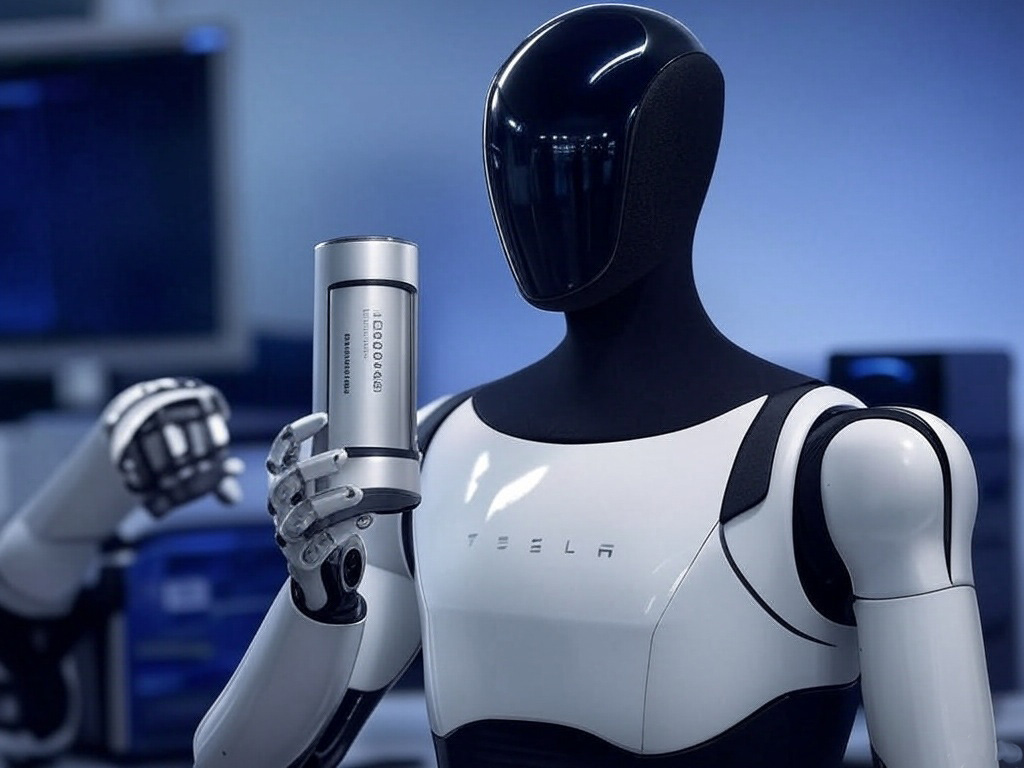
- Tesla’s Optimus robot, projected to comprise 80% of the company’s value, exemplifies the sector’s potential, with ARK’s ETF holding key positions in Tesla (9.16%), Palantir (7.02%), and AMD (6.14%).
- While acknowledging near-term AI valuation pressures, Wood asserts that Big Tech’s elevated multiples will prove justified over five years as enterprise restructuring and consumer applications unlock widespread efficiency.
Cathie Wood, founder and CEO of ARK Invest, has positioned artificial intelligence as a transformative force in the evolution of humanoid robots, emphasizing their potential to reshape industries far beyond current expectations. During a recent discussion with CNBC on the sidelines of the Future Investment Initiative in Riyadh, Saudi Arabia, Wood highlighted embodied AI – systems that integrate intelligence with physical form – as a cornerstone of future innovation. She views humanoid robots, designed to mirror human size, shape, and mobility, as the pinnacle of these opportunities, surpassing even advancements in robotaxis and healthcare applications.
Wood’s optimism stems from AI’s capacity to drive unprecedented productivity gains across enterprise and consumer domains. In the corporate arena, she anticipates a gradual adoption curve, where firms must first restructure operations to harness AI’s full potential. This process, she notes, will likely involve specialized players like Palantir Technologies (PLTR), which excels in data analytics and enterprise software to enable such overhauls. Palantir’s role in embedding AI into large-scale operations underscores the foundational work required before widespread productivity surges materialize. On the consumer front, Wood envisions AI-powered personal assistants handling routine tasks like shopping, freeing individuals to focus on higher-value activities. She personally cites AI’s existing impact on research efficiency as a harbinger of broader personal productivity enhancements.
This perspective aligns with broader industry momentum. Tesla (TSLA) CEO Elon Musk has echoed Wood’s enthusiasm, projecting that the company’s Optimus humanoid robot could account for 80% of Tesla’s long-term value. Optimus represents a strategic pivot for Tesla, leveraging its expertise in electric vehicles and autonomous driving to enter robotics, where AI enables fluid human-like interactions in manufacturing, logistics, and domestic settings. Musk’s vision positions humanoid robots not merely as tools but as scalable labor solutions, potentially addressing labor shortages in aging populations and high-cost economies.
ARK Invest’s commitment to this thesis is evident in its portfolio allocations. The ARK Artificial Intelligence & Robotics UCITS ETF features Tesla at 9.16%, Palantir at 7.02%, and Advanced Micro Devices (AMD) at 6.14% among its top holdings. AMD’s inclusion reflects the critical role of semiconductor innovation in powering AI’s computational demands, from edge devices in robots to data centers supporting training models. These investments signal ARK’s conviction that AI’s infrastructure – spanning chips, software, and robotics – will deliver compounding returns.
Yet Wood tempers her bullish outlook with pragmatism, acknowledging investor skepticism rooted in the technology’s unproven economic viability in real-world deployments. Historical precedents, such as the robotics boom of the 2010s, saw hype outpace practical outcomes, leading to valuation corrections. She also flags a near-term “reality check” for AI, driven by lofty Big Tech multiples that may face pressure amid integration challenges. Nevertheless, Wood maintains that these valuations justify themselves over a five-year horizon, as AI’s productivity multiplier – potentially rivaling the internet’s impact – unfolds.
The convergence of AI and humanoid robotics extends Wood’s insights into emerging paradigms. Healthcare stands out as a profound arena, where robots could assist in surgeries, elder care, and rehabilitation, alleviating burdens on overstrained systems. In transportation, beyond robotaxis, humanoid forms could manage fleet maintenance or last-mile deliveries with human dexterity. Retail and personal assistance sectors, long plagued by labor inefficiencies, could see robots performing nuanced tasks like inventory stocking or customer interactions, blending AI’s predictive analytics with physical agility.
As companies race to prototype viable humanoids – evidenced by prototypes from Boston Dynamics and Figure AI – the market’s trajectory hinges on overcoming hurdles like battery life, sensory precision, and ethical frameworks for human-robot coexistence. Wood’s framework, blending enterprise readiness with consumer enthusiasm, positions ARK to capture this shift, betting that AI’s embodied applications will redefine economic output in ways that vindicate today’s forward-looking stakes.
WallStreetPit does not provide investment advice. All rights reserved.
- Bulenox: Get 45% to 91% OFF ... Use Discount Code: UNO
- Risk Our Money Not Yours | Get 50% to 90% OFF ... Use Discount Code: MMBVBKSM
Disclaimer: This page contains affiliate links. If you choose to make a purchase after clicking a link, we may receive a commission at no additional cost to you. Thank you for your support!




Leave a Reply