
- Elon Musk’s potential $1 trillion compensation package, tied to aggressive milestones in AI, robotics, and energy, rewards exponential growth far beyond Tesla’s (TSLA) electric vehicle sales, signaling a shift to a technology ecosystem.
- Key vesting targets emphasize Full Self-Driving software, Robotaxi networks, Optimus humanoid robots, and Megapack energy storage, projecting trillions in value from high-margin, non-automotive innovations.
- With strong shareholder approval, the package underscores investor belief in Tesla as a Silicon Valley disruptor, eclipsing traditional automakers and aiming for a $10 trillion enterprise by 2035.
In a move that underscores the audacious ambitions of one of the world’s most polarizing CEOs, Tesla (TSLA) shareholders have overwhelmingly approved a compensation package for Elon Musk potentially worth $1 trillion, vesting over the next decade if the company meets a series of escalating performance milestones. This isn’t merely a reward for steering Tesla through its electric vehicle dominance; it’s a resounding endorsement of the company’s pivot from a car manufacturer to a multifaceted technology powerhouse, betting everything on artificial intelligence, robotics, and energy innovation. At a time when Tesla’s automotive sales face intensifying competition from legacy automakers and Chinese rivals, this package crystallizes the investor conviction that the firm’s future valuation – projected to balloon into the trillions – lies in disruptive tech ecosystems, not assembly lines.
The sheer magnitude of the deal speaks volumes. Structured as 12 tranches of stock options, the package could grant Musk up to 25% of Tesla’s equity, or roughly 423.7 million shares, contingent on hitting targets that propel the company’s market cap from its current $1.43T/$432.03 levels toward unprecedented heights. Unlike traditional CEO pay tied to quarterly earnings or unit sales, Musk’s incentives are calibrated for exponential growth: revenue thresholds in the hundreds of billions, production ramps for non-vehicle products, and operational benchmarks in AI deployment. For context, his previous 2018 package – once the largest in history at $56 billion – fueled Tesla’s EV surge but fell short of fully capturing the robotics and autonomy visions. This new iteration escalates the stakes, requiring Tesla to grow by trillions in enterprise value, a feat unattainable through cars alone, where global EV penetration is projected to plateau below 50% by 2030 according to industry forecasts.
Central to this transformation is Tesla’s aggressive foray into AI and autonomy. The pay package’s milestones explicitly hinge on advancements in Full Self-Driving (FSD) software and the Robotaxi network, which Musk has positioned as the company’s “next big thing.” With FSD subscriptions already generating recurring revenue – outpacing hardware sales in some quarters – these technologies promise a software-like margin profile, potentially 90% gross margins versus the 20-30% from vehicles. Investors aren’t rewarding Musk for building more Model Ys; they’re compensating him for orchestrating a fleet of millions of autonomous vehicles that could monetize through ride-hailing, data licensing, and even urban planning integrations. Tesla’s Dojo supercomputer, designed to train AI models on petabytes of real-world driving data, further cements this shift, positioning the company as a direct competitor to Nvidia (NVDA) in AI hardware.
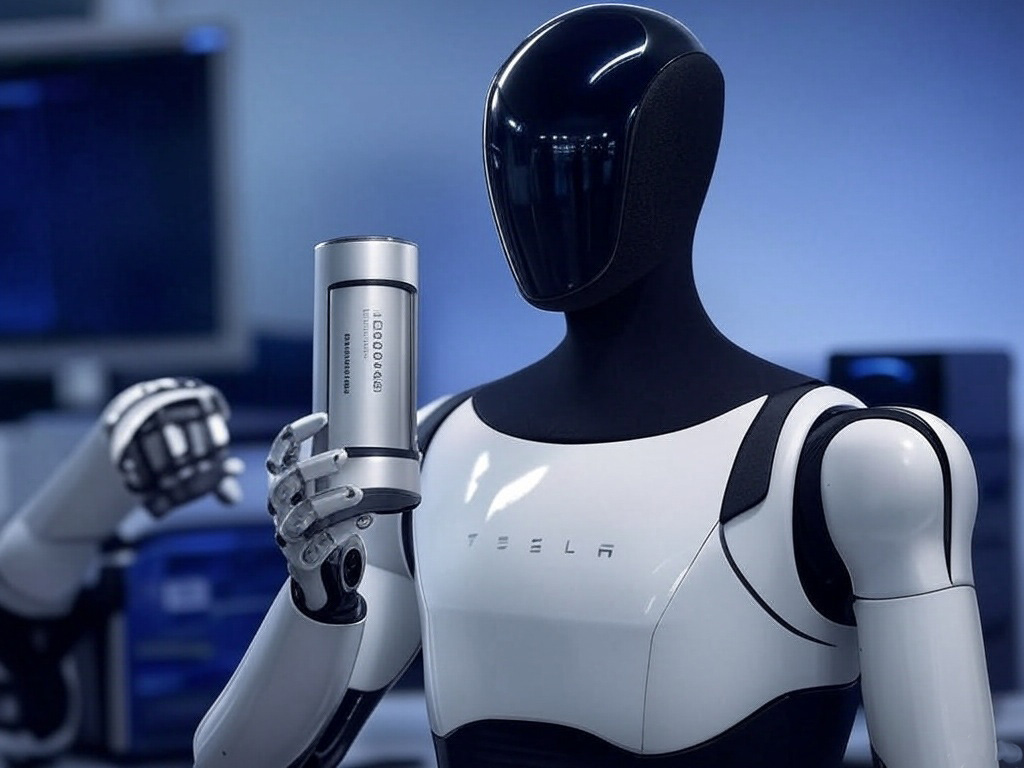
Robotics amplifies the signal. The Optimus humanoid robot, unveiled as a factory worker but eyed for consumer applications, represents Tesla’s bid to capture the $10 trillion labor automation market by 2040. Package vesting requires scaling Optimus production to thousands of units annually, integrating it with Tesla’s AI stack for tasks from warehouse logistics to household assistance. This isn’t ancillary; Musk has stated that robotics could eclipse automotive revenue within five years, a claim now baked into his trillion-dollar upside. Energy storage rounds out the triad: Megapack deployments for grid-scale batteries have already hit record deployments in 2025, with milestones demanding gigawatt-hour outputs that rival entire national power sectors. These segments – AI, bots, energy – collectively drove 40% of Tesla’s valuation premium in recent analyst models, far outstripping its 2 million annual vehicle deliveries.
Critics may decry the package as executive excess, especially amid Tesla’s recent profit dips from price wars. Yet, with 75% shareholder approval, the vote reflects a calculated risk: Musk’s track record of defying odds, from reusable rockets to neural interfaces, justifies aligning his wealth to Tesla’s moonshot aspirations. Traditional automakers like Ford (F) or GM (GM) cap CEO pay at $20 – 30 million annually, tethered to finite markets. Tesla’s board, by contrast, has engineered a mechanism that vests fully only if the company transcends Detroit’s playbook, achieving 25% founder control to ward off activist dilution.
By 2035, when the package matures, Tesla could command a $10 trillion enterprise if these bets pay off – dwarfing Apple’s (AAPL) current scale through a constellation of AI-driven services. The $1 trillion payout isn’t hubris; it’s a litmus test for Tesla’s reinvention. Gone are the days of it being “just a car company.” This is the compensation architecture of a Silicon Valley titan, rewarding the architect of tomorrow’s intelligent economy. Investors, it seems, are all in.
WallStreetPit does not provide investment advice. All rights reserved.
- Bulenox: Get 45% to 91% OFF ... Use Discount Code: UNO
- Risk Our Money Not Yours | Get 50% to 90% OFF ... Use Discount Code: MMBVBKSM
Disclaimer: This page contains affiliate links. If you choose to make a purchase after clicking a link, we may receive a commission at no additional cost to you. Thank you for your support!



Leave a Reply