
- GameStop (NYSE: GME) reported Q3 revenue of $821 million, significantly missing the $987.3 million analyst consensus, driven by a 12% decline in its core hardware and accessories segment.
- The miss highlights the company’s ongoing struggle to offset the structural decline in physical game sales amid the industry’s rapid shift to digital downloads, subscription services, and cloud gaming.
- Shares dropped over 6% in premarket trading to $21.66 after closing at $23.11, continuing the post-2021 pattern of high volatility detached from improving fundamentals.
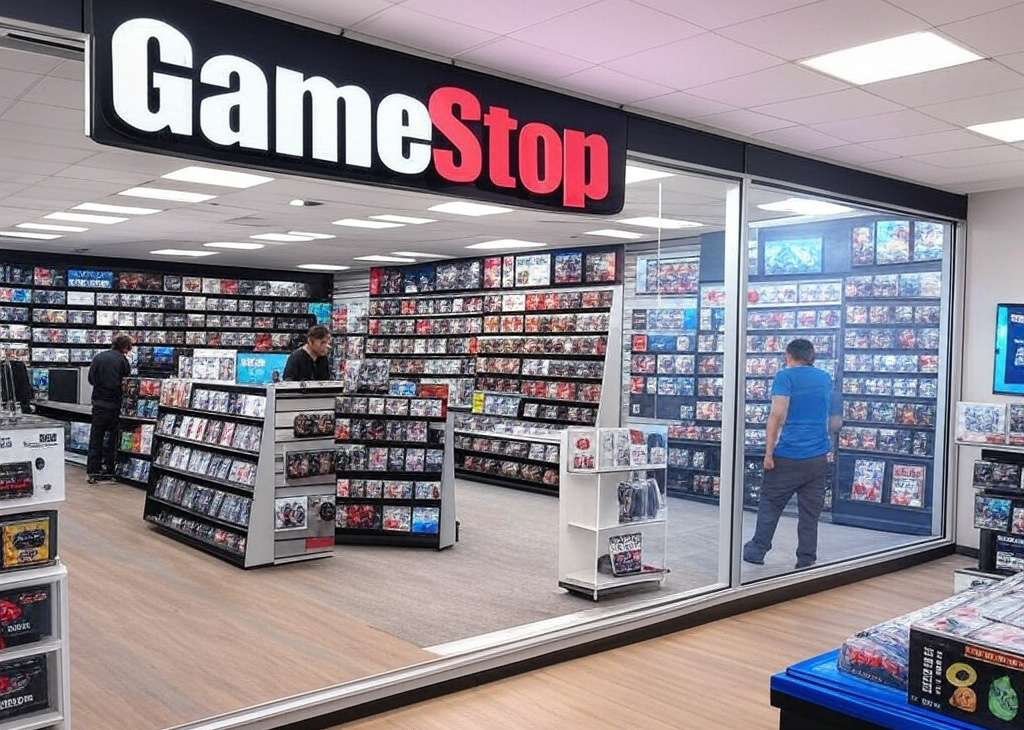
GameStop (NYSE: GME) reported third-quarter revenue of $821 million, missing the LSEG consensus estimate of $987.3 million and underscoring the persistent difficulties the company faces in transitioning away from its legacy brick-and-mortar model. In the same quarter a year ago, GameStop posted earnings of $0.06 per share on revenue of $860 million, representing a 4.5% decline. Shares fell more than 6% in premarket trading Wednesday to $21.66 after closing Tuesday at $23.11, a 1.03% daily decline.
The revenue shortfall was driven primarily by a 12% year-over-year decline in the hardware and accessories segment, which remains GameStop’s largest category and encompasses new and pre-owned console sales, controllers, and physical game discs. That drop reflects the accelerating industry shift toward digital distribution, where consumers increasingly purchase games directly through platform stores operated by Microsoft (MSFT), Sony, and Nintendo, or via subscription services such as Xbox Game Pass and PlayStation Plus.
Despite investments in its e-commerce platform and attempts to broaden the product offerings through digital download codes, exclusive collectibles, and publisher partnerships, these initiatives have failed to offset the structural erosion of the company’s core physical retail business. The rise of cloud gaming, direct-to-consumer digital storefronts, and dominant online marketplaces such as Amazon has further compressed GameStop’s addressable market for both games and general consumer electronics.
The company’s challenges are compounded by the broader secular decline in demand for optical disc-based media. Global physical game sales have fallen steadily for years, with most AAA titles now deriving 80 – 90% of their unit volume from digital channels in major markets. GameStop’s store footprint, once an advantage during the retail-dominated era of the 2000s and early 2010s, has become a significant cost burden as foot traffic continues to migrate online.
Since the extraordinary 2021 short squeeze that briefly pushed its market capitalization above $20 billion, GameStop’s stock has remained highly volatile, trading primarily on retail sentiment and macro liquidity conditions rather than on improving fundamentals. The latest quarterly results provide fresh evidence that, absent a successful large-scale pivot into higher-growth adjacencies or a meaningful recovery in physical game demand, the company’s revenue base will remain under pressure from the same powerful industry trends that have marginalized other specialty retail formats in the digital age.
WallStreetPit does not provide investment advice. All rights reserved.
- Bulenox: Get 45% to 91% OFF ... Use Discount Code: UNO
- Risk Our Money Not Yours | Get 50% to 90% OFF ... Use Discount Code: MMBVBKSM
Disclaimer: This page contains affiliate links. If you choose to make a purchase after clicking a link, we may receive a commission at no additional cost to you. Thank you for your support!


Leave a Reply