
- Tesla (TSLA) shares fell 6.64% to close at $401.99 on Thursday, dipping further to $383.51 in Friday premarket trading, marking a 10% decline since the approval of Elon Musk’s $1 trillion compensation package amid broader tech sector weakness.
- Analysts like Wedbush’s Dan Ives remain optimistic, rating the stock ‘Outperform’ with a $600 price target and highlighting Tesla’s potential to dominate 80% of the autonomous vehicle market over the next decade through AI advancements.
- Tesla is advancing its robotaxi service with testing in Austin and the San Francisco Bay Area, planning Cybercab production in April 2026, while scaling Optimus humanoid robots toward 1 million-unit output at Fremont, California and 10 million at Giga Texas.
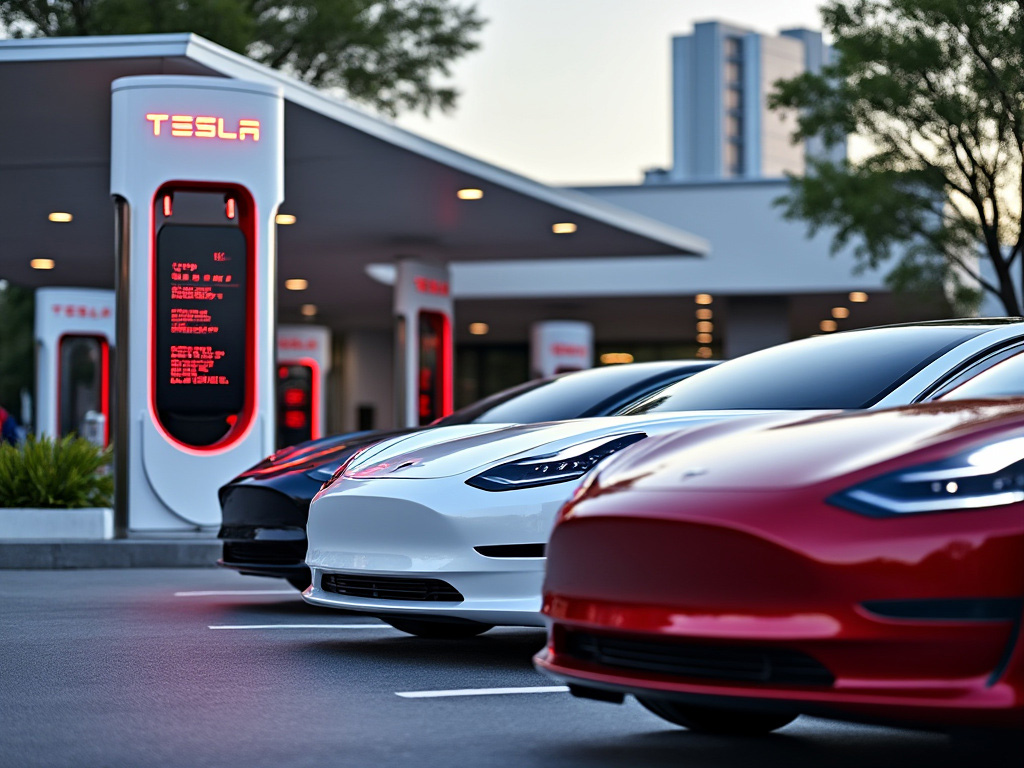
Tesla’s stock (TSLA) came under intense pressure this week, breaching the critical $400 level after a two-day selloff that marked its steepest decline since late July. Shares closed Thursday’s session at $401.99, reflecting a 6.64% decline – the company’s worst single-day drop since late July. Premarket trading on Friday pushed the price further to $383.51, marking a nearly 5% intraday loss and extending the pullback to 10% since shareholders approved CEO Elon Musk’s $1 trillion compensation package last week. The breach of the $400 threshold brought the stock to lows not seen since September 15, highlighting investor sensitivity to both macroeconomic pressures and sector volatility.
Despite these short-term pressures, the resolution of Musk’s pay package saga has refocused attention on Tesla’s long-term trajectory in artificial intelligence and autonomous technologies. Analysts such as Wedbush’s Dan Ives view this milestone as a pivotal “bright green light” for the company’s ambitions, maintaining an ‘Outperform’ rating with a $600 price target – the highest on the Street. Ives emphasizes that Tesla’s narrative is evolving beyond traditional vehicle deliveries toward dominance in the AI-driven mobility ecosystem. He projects the company capturing 80% of the autonomous landscape over the next decade, positioning it as a leader in reshaping transportation and labor markets.
Central to this vision is Tesla’s accelerated push into self-driving capabilities and robotaxi deployment. The company is actively testing its robotaxi service in Austin, Texas, and the San Francisco Bay Area, currently with safety drivers on board. Musk has indicated that these drivers will be phased out in Austin by year-end, with expansions planned for Miami, Dallas, Phoenix, and Las Vegas. Production of the purpose-built Cybercab robotaxi is slated to commence in April of next year, integrating advanced full self-driving (FSD) software to enable unsupervised operations at scale.
This autonomous foundation extends to Tesla’s humanoid robotics initiative with Optimus, which Ives identifies as the true long-term value driver. Investors must adopt a multi-year horizon, as progress here prioritizes technological breakthroughs over immediate quarterly metrics. Tesla disclosed plans for a 1 million-unit Optimus production line at its Fremont, California factory, where pilot production is already underway, alongside a future 10 million-unit facility at Giga Texas in Austin – though no specific timelines were provided. These developments align with broader industry trends, where Tesla’s vertical integration of AI hardware, software, and manufacturing gives it an edge in scaling humanoid robots for tasks ranging from warehouse automation to household assistance.
Musk’s compensation structure reinforces these priorities, tying a significant portion of the $1 trillion package to ambitious deliverables: 10 million active FSD subscriptions, 1 million Optimus robots, and 1 million robotaxis, among other milestones. Achieving these would not only validate Tesla’s technological roadmap but also unlock substantial revenue streams from software licensing, fleet operations, and robotics-as-a-service models. As Tesla navigates current market turbulence, its execution on these fronts could redefine its valuation multiple, drawing parallels to how software margins have transformed other tech giants. For now, the stock’s resilience hinges on demonstrating tangible progress, with the AI chapter poised to eclipse past controversies and propel TSLA toward sustained growth.
WallStreetPit does not provide investment advice. All rights reserved.
- Bulenox: Get 45% to 91% OFF ... Use Discount Code: UNO
- Risk Our Money Not Yours | Get 50% to 90% OFF ... Use Discount Code: MMBVBKSM
Disclaimer: This page contains affiliate links. If you choose to make a purchase after clicking a link, we may receive a commission at no additional cost to you. Thank you for your support!



Leave a Reply