
- Nvidia (NVDA) is reportedly planning to ship 5,000 to 10,000 H200 AI chip modules (equivalent to 40,000–80,000 chips) to Chinese clients from existing stock before the Lunar New Year in mid-February 2026, pending Beijing’s approval.
- The move follows a major U.S. policy shift under President Trump, allowing H200 sales to China with a 25% fee, reversing Biden-era export bans.
- Chinese tech giants like Alibaba Group (BABA) and ByteDance are interested, as the H200 offers roughly six times the performance of Nvidia’s China-specific H20 chip, though final approval and potential domestic-chip bundling requirements remain uncertain.
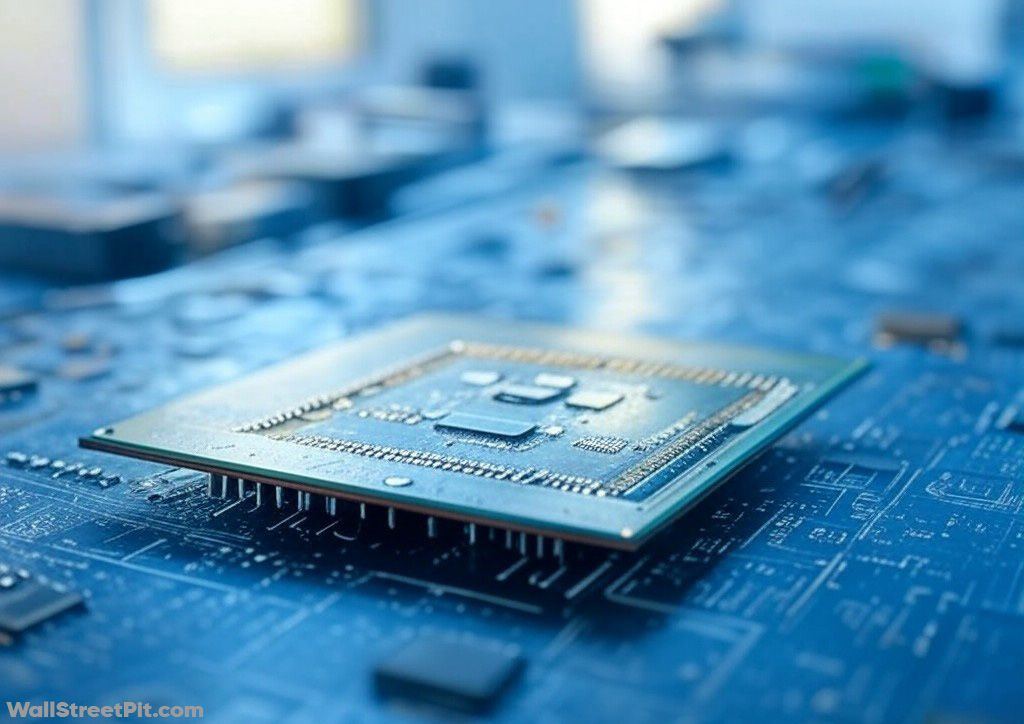
Reuters reports that Nvidia (NVDA) has told Chinese clients it plans to begin shipping H200 AI chips before the Lunar New Year holiday in mid‑February 2026. Initial deliveries are expected to come from existing inventory, with between 5,000 and 10,000 chip modules slated for shipment – equivalent to roughly 40,000 to 80,000 individual H200 chips.
The H200, part of Nvidia’s Hopper architecture, features advanced specifications including 141 GB of HBM3e memory and 4.8 TB/s bandwidth, making it suitable for demanding AI workloads. Despite being succeeded by the Blackwell and upcoming Rubin lines, the H200 remains a high-performance option for generative AI and high-performance computing applications.
This development follows a significant U.S. policy adjustment under President Donald Trump, who announced that Washington would permit sales of the H200 to China, subject to a 25% fee collected by the U.S. government. The Trump administration has initiated an inter-agency review of license applications to facilitate these exports, marking a departure from the Biden-era restrictions that prohibited advanced AI chip sales to China on national security grounds. The fee structure aims to generate revenue while maintaining oversight.
Chinese technology companies, including Alibaba Group (BABA) and ByteDance, have expressed strong interest in acquiring the H200, the report notes. These processors offer roughly six times the performance of Nvidia’s H20, the downgraded variant previously designed for the Chinese market. Potential buyers view the H200 as a means to enhance their AI capabilities amid growing demand for large-scale model training and inference.
However, uncertainties persist regarding the timeline and final approval. Beijing has not yet authorized any H200 purchases, and the process remains contingent on government decisions. Chinese officials conducted emergency meetings earlier this month to evaluate the implications of allowing imports. One proposal under consideration involves requiring each H200 purchase to be bundled with a specified ratio of domestically produced chips.
The policy shift occurs as China advances its domestic AI chip industry. Local firms, including Huawei and others, continue to develop alternatives, though they have yet to fully match the H200’s capabilities. Allowing imports could potentially impact progress in self-reliance efforts, prompting concerns among regulators.
Nvidia has also indicated plans to expand production capacity for the H200, with new orders expected to open in the second quarter of 2026. This expansion would support sustained demand should approvals proceed.
The planned shipments represent the first potential deliveries of H200 chips to China under the revised U.S. framework.
WallStreetPit does not provide investment advice. All rights reserved.
- Bulenox: Get 45% to 91% OFF ... Use Discount Code: UNO
- Risk Our Money Not Yours | Get 50% to 90% OFF ... Use Discount Code: MMBVBKSM
Disclaimer: This page contains affiliate links. If you choose to make a purchase after clicking a link, we may receive a commission at no additional cost to you. Thank you for your support!



Leave a Reply