
- SpaceX is reportedly planning a 2026 IPO to raise more than $25 billion, potentially valuing the company at $1.5 trillion or higher, driven by strong growth in Starlink and launch operations.
- Investor enthusiasm remains high for the offering, viewing Elon Musk’s leadership and the company’s innovative strengths in rocket reusability and satellite broadband as key attractions despite associated risks and historical IPO performance challenges.
- While SpaceX’s established revenue streams and future technologies promise substantial rewards, high private valuations limit upside potential, with past richly priced IPOs often underperforming the broader market over time.
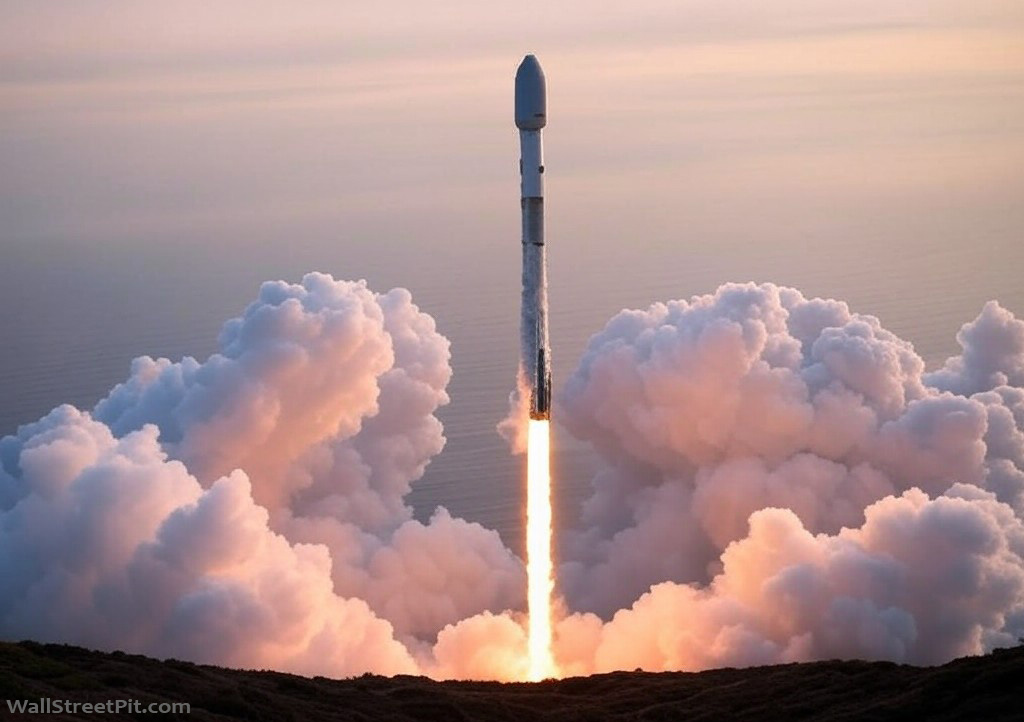
Investors are showing strong enthusiasm for SpaceX’s prospective initial public offering, a move that could unlock significant capital to advance its ambitious space exploration goals while providing long-sought access to one of the most innovative companies in the sector. The private aerospace leader, currently valued through secondary transactions at nearly $800 billion, is preparing to raise more than $25 billion in the offering, which Reuters has reported could come as early as mid-2026. Such a raise would propel its market capitalization beyond $1 trillion. This development aligns with a broader resurgence in the IPO market following a multi-year slowdown, positioning SpaceX to capitalize on its established operations in rocket launches and satellite broadband services.
The company’s dual strengths in current revenue generation and long-term technological promise form a compelling foundation for this transition to public markets. SpaceX’s launch business has achieved unprecedented reliability, with Falcon 9 rockets completing over 160 flights in 2025 alone, many dedicated to deploying Starlink satellites. Starlink, now serving more than 6 million customers across over 100 countries, has driven substantial growth through its high-speed internet connectivity, including expansions into direct-to-cell services and partnerships for global coverage. These operations not only generate consistent cash flow but also support critical contracts with entities like NASA and the Department of Defense, underscoring SpaceX’s role as a cornerstone of modern space infrastructure. Proceeds from the IPO could accelerate investments in emerging technologies, such as orbital data centers that leverage the vacuum of space for efficient, low-energy computing, further enhancing the company’s competitive edge in the evolving space economy.
Despite the high capital demands and inherent risks of the industry, demand from retail investors is expected to be substantial, reflecting years of anticipation for an opportunity to invest directly. Analysts anticipate this could become one of the most dynamic public debuts, with potential for the valuation to climb from an initial $1.5 trillion target to over $2 trillion upon trading commencement, driven by the blend of proven execution and visionary potential. Institutional interest is equally robust; for instance, Neuberger Berman’s $2.1 billion Quality Equity Fund allocates about 5% of its assets to unlisted SpaceX shares as of late November, viewing the company as a standout in the technology revolution with a clear path to sustained expansion.
Elon Musk’s leadership, as CEO, chief designer, and founder, remains a central factor in SpaceX’s appeal, even amid the volatility it introduces. As the world’s richest individual with a net worth exceeding $465 billion, primarily tied to his stakes in Tesla and SpaceX, Musk oversees five ventures, including infrastructure developer The Boring Company and AI innovator xAI. His tenure at the publicly traded Tesla (TSLA) has involved regulatory challenges, such as civil fines stemming from a 2018 tweet claiming “funding secured” to privatize the company, which led to his removal as chairman and restrictions on social media activity. More recently, Musk threatened to depart Tesla unless the board approved a 10-year compensation package valued at $1 trillion, while his brief role in the Trump administration’s Department of Government Efficiency contributed to temporary dips in Tesla’s shares and sales. Yet, such turbulence is seen as intrinsic to investing in disruptive enterprises, where the potential rewards – evident in Tesla’s decade – long outperformance since its 2010 IPO-outweigh the uncertainties, according to Christopher Marangi, co-chief investment officer for value at GAMCO Investors.
GAMCO maintains indirect exposure to SpaceX via its holdings in EchoStar, acquired through a September spectrum transaction, and holds a stake in satellite operator Telesat, signaling conceptual enthusiasm for space-oriented investments without committing to additional IPO allocations at this stage. Similarly, James St Aubin, chief investment officer at Ocean Park Asset Management, highlights to Reuters SpaceX’s trajectory as a potential addition to an expanded roster of leading tech equities, often referred to as the “Great Eight” by 2026, building on the established group of dominant players. This optimism stems from SpaceX’s ability to command premium multiples based on its growth forecasts, allowing investors to prioritize expansive service opportunities over immediate valuation constraints.
Historical patterns among high-valuation IPOs, however, warrant caution. Research by University of Florida professor emeritus Jay Ritter reveals that from 1980 to 2023, among 45 companies debuting with at least $100 million in inflation-adjusted revenue and multiples exceeding 40 times annual sales, only seven traded higher three years post-listing. These stocks, on average, shed about half their first-day closing value and underperformed the broader market by roughly 63%. Examples of underperformance include Beyond Meat’s 2019 launch and Palm’s 2000 debut, while successes like Datadog and Zoom from 2019 stand out, alongside Tesla’s exceptional rise from a more grounded starting point. Ritter notes that SpaceX’s elevated private valuation inherently caps near-term upside; even attaining $2 trillion post-IPO would represent returns of 100% to 200%, a respectable but not transformative outcome relative to the risks involved.
In this context, SpaceX’s IPO represents a pivotal moment for the capital markets, blending operational maturity with frontier innovation to attract a diverse investor base. Shay Boloor, chief market strategist at Futurum Equities Research, emphasizes the event’s potential to redefine public enthusiasm for space ventures, while Dan Hanson, senior portfolio manager at Neuberger Berman, points to the rarity of a profile offering both immediate viability and transformative horizon. As discussions with banks progress, the offering’s structure will likely balance these elements, ensuring SpaceX can sustain its momentum in revolutionizing access to orbit and beyond.
WallStreetPit does not provide investment advice. All rights reserved.
- Bulenox: Get 45% to 91% OFF ... Use Discount Code: UNO
- Risk Our Money Not Yours | Get 50% to 90% OFF ... Use Discount Code: MMBVBKSM
Disclaimer: This page contains affiliate links. If you choose to make a purchase after clicking a link, we may receive a commission at no additional cost to you. Thank you for your support!


Leave a Reply