
- The Federal Reserve delivered a quarter-point rate cut to 3.5% – 3.75% but signaled a sharply more cautious outlook, with the dot plot unchanged at only one cut in 2026 and another in 2027, seven officials projecting no cuts next year, and three formal dissents – the most since September 2019.
- Persistent inflation (2.8% on the Fed’s preferred gauge) and an upgraded 2026 GDP forecast to 2.3% highlighted the committee’s struggle to balance a resilient but slowing labor market against inflation that is not expected to reach 2% until 2028.
- Amid leadership transition and liquidity concerns, the Fed resumed Treasury purchases starting with $40 billion while facing an incoming Trump administration likely to nominate a chair (Kevin Hassett currently 72% on prediction markets) favoring lower rates over strict adherence to the dual mandate.
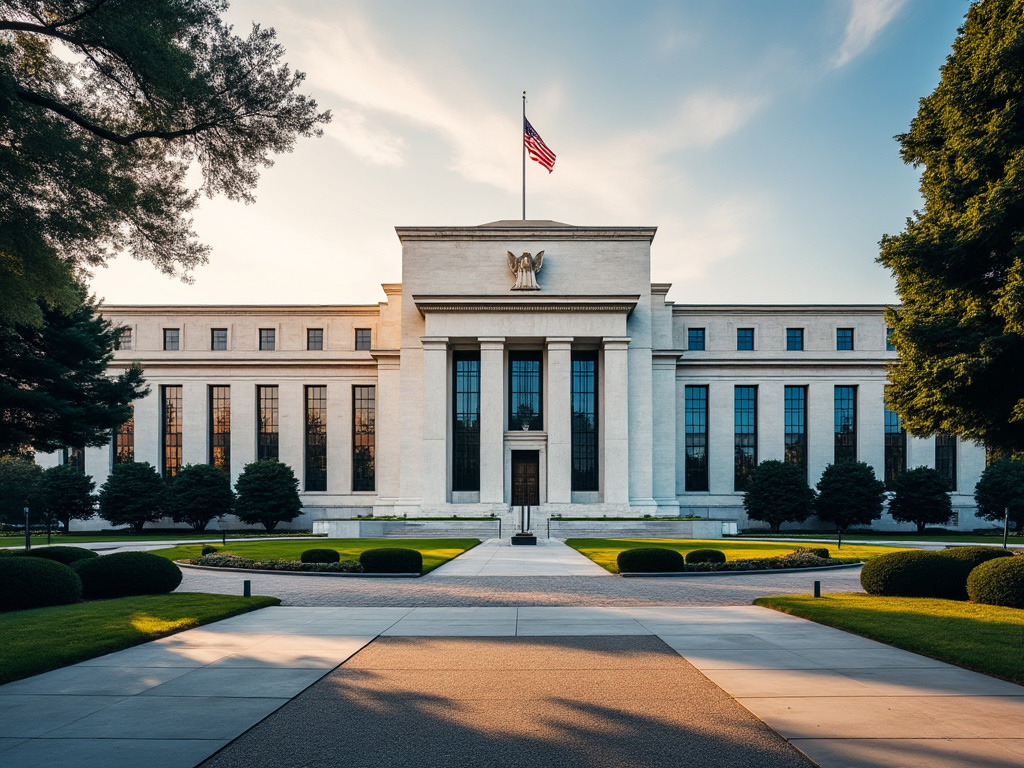
The Federal Reserve’s latest policy action underscores a pivotal moment in monetary strategy, where the imperative to safeguard employment collides with persistent inflationary pressures. By reducing the federal funds rate to a range of 3.5% – 3.75%, the Federal Open Market Committee executed its third consecutive quarter-point adjustment, a measured step designed to mitigate emerging strains in the labor market. This decision, however, emerged from a notably fractured consensus, with three dissenting votes marking the first such occurrence since September 2019. Governor Stephen Miran advocated for a more aggressive half-point cut, while Kansas City President Jeffrey Schmid and Chicago President Austan Goolsbee preferred to maintain the current stance, reflecting entrenched hawkish concerns over inflation’s trajectory. Miran’s third successive dissent highlights his impending departure in January, amplifying the internal tensions that have defined recent deliberations.
This division extends beyond the immediate vote, permeating the committee’s forward guidance. The updated dot plot, which aggregates individual projections from the 19 participants, projects only one additional cut in 2026 and another in 2027, stabilizing the rate near a longer-run equilibrium of around 3%. Unchanged from the September assessment, these forecasts nonetheless reveal deeper fissures: seven officials anticipate no reductions next year, and four nonvoting members expressed reservations through soft dissents. Such fragmentation signals a committee grappling with competing mandates, where doves prioritize employment resilience and hawks insist on anchoring inflation expectations firmly at the 2% target. The post-meeting statement reinforces this caution, echoing phrasing from December 2024 that preceded a nine-month pause in cuts until September 2025. It commits to evaluating incoming data, the evolving economic outlook, and risk balances before any further adjustments, a formulation that historically presages restraint.
Economic projections further illuminate these challenges. The committee elevated its 2026 gross domestic product growth estimate by half a percentage point to 2.3%, signaling optimism about moderate expansion amid a cooling yet stable backdrop. Yet inflation remains a stubborn obstacle, with the preferred personal consumption expenditures gauge registering 2.8% annually in September – the latest available figure – well above the 2% objective, a level projected to persist until 2028. This elevated price environment, though moderated from earlier peaks, complicates the path to normalization, as core measures continue to exhibit resilience in services and housing sectors. Compounding these assessments is the fallout from a six-week government shutdown ending November 12, which delayed critical data releases and obscured real-time insights into inflation and unemployment. Available indicators depict a labor market characterized by restraint: employers have shown hesitancy in both hiring and firing, fostering a low-turnover dynamic. Unofficial tallies, however, paint a more ominous picture, with Challenger, Gray & Christmas reporting over 1.1 million announced layoffs through November, hinting at accelerating weakness that could necessitate bolder policy responses.
In tandem with the rate adjustment, the Federal Reserve addressed liquidity strains by resuming Treasury securities purchases, initiating with $40 billion starting Friday. This follows the October announcement to halt balance sheet runoff this month, responding to episodic turbulence in overnight funding markets reminiscent of stresses observed in prior tightening cycles. Purchases are slated to remain elevated for several months before significant tapering, a calibrated intervention to ensure ample reserves without reigniting inflationary impulses. These steps occur against a backdrop of institutional transition, as Chair Jerome Powell approaches the conclusion of his second term with just three meetings remaining. President Donald Trump’s forthcoming nominee introduces additional uncertainty, with signals suggesting a preference for rate accommodation over strict adherence to the dual mandate of price stability and maximum employment. Prediction markets, such as Kalshi, currently assign a 72% probability to National Economic Council Director Kevin Hassett as the frontrunner, followed distantly by former Governor Kevin Warsh and incumbent Governor Christopher Waller. Hassett’s selection could tilt the board toward more accommodative postures, potentially deepening the hawk-dove schisms already evident.
The interplay of these elements positions the Federal Reserve at a delicate juncture, where limited scope for further easing – given the rate’s proximity to neutral – demands vigilant calibration. Historical precedents, including the post-2019 dissent era, illustrate how such internal discord can prolong uncertainty, influencing everything from corporate investment decisions to household borrowing costs. As data gaps from the shutdown gradually fill, the committee’s ability to reconcile these divergent views will prove essential in navigating a landscape of subdued growth potential and entrenched price dynamics. This episode reaffirms the Fed’s role as a stabilizing force, albeit one tested by the very trade-offs inherent to its mandate.
WallStreetPit does not provide investment advice. All rights reserved.
- Bulenox: Get 45% to 91% OFF ... Use Discount Code: UNO
- Risk Our Money Not Yours | Get 50% to 90% OFF ... Use Discount Code: MMBVBKSM
Disclaimer: This page contains affiliate links. If you choose to make a purchase after clicking a link, we may receive a commission at no additional cost to you. Thank you for your support!

Leave a Reply