
- The Federal Reserve is widely expected to deliver a 25 basis point rate cut today – its third in 2025 – but the decision is likely to feature rare dissents from both hawks (concerned about inflation) and at least one dove (Governor Miran pushing for 50bp cuts), with the possibility of up to five total dissents for the first time since 1983.
- To limit divisions and anchor expectations, Chair Powell and the statement are anticipated to signal a high bar for additional cuts in early 2026, potentially reinserting language about carefully “considering the extent and timing” of further adjustments and indicating a likely pause in January.
- Updated ‘dot plots,’ or updated economic projections released today are expected to show markedly fewer rate cuts in 2026 than the single cut penciled in during September, with major-bank economists now forecasting only one or at most two reductions next year amid persistent above-target inflation and upcoming leadership transition.
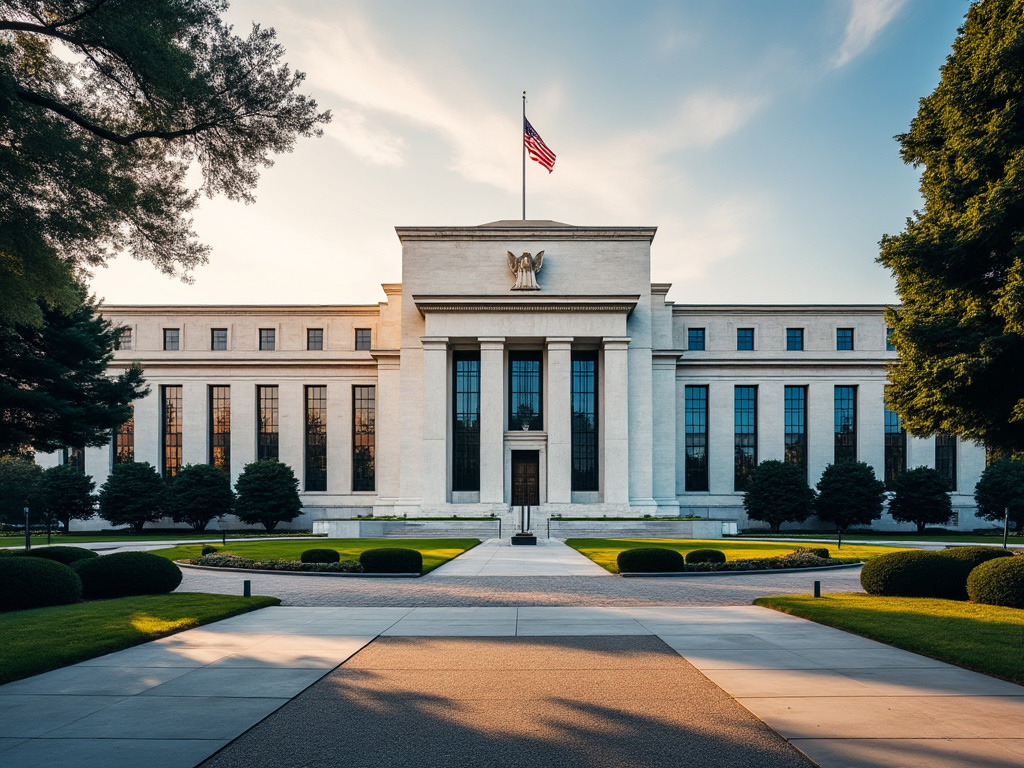
Investors are closely monitoring the Federal Reserve’s latest policy meeting, where a 25 basis point reduction in the benchmark interest rate is anticipated as the third such action of 2025. This move reflects the central bank’s ongoing efforts to navigate a labor market showing signs of softening alongside persistent inflationary pressures that remain approximately one percentage point above the 2 percent target. While the decision itself garners broad market expectations, internal divisions among Federal Open Market Committee members could result in dissents ranging from one to as many as five, marking a notable departure from recent unanimous votes and echoing the last instance of five dissents in May 1983 under Chair Paul Volcker.
These divisions stem from contrasting assessments of economic risks. On one side, officials including Boston Fed President Susan Collins, Kansas City Fed President Jeff Schmid, Chicago Fed President Austan Goolsbee, and St. Louis Fed President Alberto Musalem have highlighted inflation concerns, with Schmid previously dissenting at the prior meeting in favor of maintaining steady rates to avoid stimulating demand that could exacerbate price pressures. In contrast, Fed Governor Stephen Miran has advocated for more aggressive easing, dissenting repeatedly for 50 basis point cuts and arguing that tariffs pose no inflationary threat while anticipating declines in housing prices that would ease broader inflation metrics. Such hawkish and dovish fractures underscore the Fed’s challenge in balancing maximum employment with price stability, a dual mandate that has grown increasingly complex amid recent fiscal uncertainties and data disruptions from the government shutdown, which delayed key October inflation and unemployment releases.
To secure support for the current cut and limit dissents, Chair Jerome Powell is likely to emphasize in the accompanying policy statement and press conference – scheduled for 2 p.m. ET and 2:30 p.m. ET, respectively – that future reductions face a high threshold, particularly in early 2026. This signaling aligns with efforts to anchor expectations, drawing on the Fed’s historical use of forward guidance to foster cohesion during periods of policy divergence. Analysts anticipate the reinstatement of language indicating that members will consider the extent and timing of additional adjustments, a phrase that could imply a potential pause as soon as the January meeting, allowing incoming data to inform subsequent steps without precommitting to further easing.
Accompanying the announcement will be the Fed’s updated Summary of Economic Projections, including interest rate dot plots for 2026 alongside revised forecasts for growth, inflation, and employment. September’s projections envisioned three cuts through the fall of 2025 and just one in 2026, but with evident unease over continued easing – given inflation’s elevated stance – revisions may reflect even greater restraint. JPMorgan (JPM) Chief Economist Michael Feroli projects only one additional cut next year, attributing this to a slim majority favoring the current action and Powell’s expected remarks framing rates as approaching a neutral stance that neither accelerates nor restrains growth. Feroli further anticipates Powell will avoid direct commentary on January’s decision, instead highlighting the volume of forthcoming data releases that will shape deliberations, thereby preserving flexibility in a data-dependent framework.
Deutsche Bank (DB) Chief U.S. Economist Matthew Luzzetti similarly foresees efforts to minimize divisions through cautious messaging, positioning the 2026 outlook as one where most rate reductions conclude for the near term. Bank of America (BAC) Senior U.S. Economist Aditya Bhave aligns with this tempered view, expecting no more than two cuts in 2026 and doubting that rates will fall below 3 percent under the committee’s current dynamics. This restraint is compounded by the broader institutional transition ahead: President Trump’s anticipated appointment of a new chair to succeed Powell, whose term expires in May 2026, introduces uncertainty that could prolong dispersion in policy views and constrain aggressive easing. A successor inheriting a divided FOMC may prioritize consensus-building over rapid adjustments, potentially stabilizing rates at levels supportive of sustained expansion without reigniting inflationary forces.
The Federal Reserve’s approach in this cycle draws on lessons from prior tightening episodes, where premature easing risked undoing hard-won disinflation gains, as seen in the early 1980s under Volcker. Today’s deliberations thus represent a pivotal calibration point, with the central bank’s projections and Powell’s communication poised to calibrate market pricing for a 2026 path marked by measured progress rather than accelerated accommodation. As borrowing costs edge lower to levels last observed in 2022, the focus sharpens on how these signals influence asset valuations and economic resilience in the quarters ahead.
WallStreetPit does not provide investment advice. All rights reserved.
- Bulenox: Get 45% to 91% OFF ... Use Discount Code: UNO
- Risk Our Money Not Yours | Get 50% to 90% OFF ... Use Discount Code: MMBVBKSM
Disclaimer: This page contains affiliate links. If you choose to make a purchase after clicking a link, we may receive a commission at no additional cost to you. Thank you for your support!

Leave a Reply