
- Tesla’s (TSLA) FSD has achieved a >20x improvement in miles to critical disengagement (from 441 to over 9,200 miles) with v14.1.x, while Austin Robotaxi data shows 40,000 miles between crashes and implies ~3 years without a crash at average annual mileage.
- Piper Sandler believes Tesla is “very close” to unsupervised FSD and removing safety operators from Austin robotaxis, maintaining an ‘Overweight’ rating and $500 price target.
- Despite a temporary dip in v14.2.x performance, ongoing data collection is expected to drive rapid improvement, positioning 2026 as a major inflection point for Tesla’s autonomous driving leadership.

Tesla’s Full Self-Driving (FSD) technology stands at the forefront of automotive innovation, representing a potential transformation in personal and shared mobility. Recent evaluations from independent trackers and Wall Street analysts underscore the system’s accelerating reliability, positioning Tesla (TSLA) on the cusp of unsupervised operations where drivers could disengage entirely from vehicle control. This advancement not only enhances Tesla’s competitive edge in the electric vehicle sector but also signals broader implications for safety and operational efficiency in autonomous systems.
Central to this progress is the core metric of miles to critical disengagement, a measure of how frequently human intervention is required to avert potential incidents. Data from the FSD Community Tracker reveals a marked enhancement following the October release of FSD version 14.1.x, with the figure advancing from 441 miles to over 9,200 miles – a more than 20-fold increase and the largest sequential gain observed in four years of monitoring. This leap reflects the cumulative impact of vast real-world driving datasets, enabling neural networks to refine decision-making in complex urban environments. Complementing this, Austin-based Robotaxi operations have demonstrated robust safety profiles, logging approximately 280,000 miles across seven National Highway Traffic Safety Administration (NHTSA) reported incidents, equating to 40,000 miles between crashes. For the average driver accumulating 13,000 miles annually, this translates to roughly three years of operation without a crash, based on June through October figures. As additional data accumulates, these intervals are projected to extend further, bolstering confidence in scalability.
While version 14.2.x registered a temporary performance dip, ongoing data collection – expected to yield insights within the next three-plus weeks – should drive refinements, aligning with Tesla’s iterative development model. This resilience is critical for the Austin Robotaxi initiative, where the integration of FSD could soon eliminate the need for safety operators, streamlining fleet efficiency and reducing overhead costs. Piper Sandler analyst Alexander Potter, drawing from direct consultations with the FSD Community Tracker, emphasizes that Tesla is “very close” to this threshold, maintaining an ‘Overweight’ rating on the stock with a $500 price target (at last check TSLA was trading at $447.19). Such optimism is tempered by regulatory realities; achieving full Level 4 autonomy, as defined by SAE International standards, demands NHTSA validation, a process that has thus far limited deployments to geofenced areas.
In the broader landscape, Tesla’s FSD differentiates itself through a vision-only approach, leveraging high-resolution cameras and end-to-end machine learning rather than reliance on lidar or radar, which competitors like Alphabet’s (GOOGL) Waymo employ. Waymo currently operates Level 4 robotaxis in delimited territories such as Phoenix and San Francisco, serving over 100,000 paid rides weekly with human oversight phased out in core zones. Tesla’s strategy, however, prioritizes generalization across diverse conditions, amassing over 1.5 billion miles of supervised FSD data by mid-2025 – a dataset exponentially larger than Waymo’s, fostering adaptability without hardware proliferation. Elon Musk has highlighted version 14.2.x’s contextual awareness, enabling features like in-car productivity during low-risk scenarios, though legal constraints on distracted driving persist across nearly all U.S. states.
Looking ahead, 2026 emerges as a pivotal inflection point for autonomous driving commercialization, per Morgan Stanley (MS) projections. The firm anticipates services launching in 33 U.S. cities, with 17 already announced and nine more deemed highly probable, driven by maturing AI and regulatory frameworks. This expansion could catalyze a $200 billion market opportunity by 2030, with adoption of partial-to-full automation rising from 8% in 2024 to 28% in developed economies. Morgan Stanley’s Andrew Percoco views FSD as the “crown jewel” of Tesla’s portfolio, conferring a substantial moat over electric and traditional vehicle rivals through its proprietary software stack. Yet, Percoco’s measured outlook acknowledges execution risks, including hardware scalability for older fleets and integration with emerging robotaxi networks.
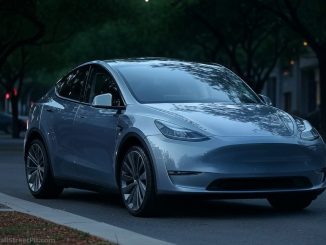
Tesla’s Austin Robotaxi pilot, initiated in June 2025 with a modest fleet of Model Y vehicles, exemplifies this trajectory. Geofenced to safer corridors and monitored remotely, the service has expanded incrementally, with plans to double the fleet – estimated at around 30 vehicles – to approximately 60 by year-end, falling short of the initial 500-unit target but prioritizing validation over volume. This cautious ramp-up has yielded incident-free testing phases, informing Cybercab production slated for 2026 and potential partnerships, such as with Uber in Dallas. Regulatory momentum, including federal preemption of state-level barriers, could accelerate nationwide unsupervised rollouts by late 2025 in select cities, aligning with Tesla’s Q2 earnings guidance.
Ultimately, FSD’s evolution underscores Tesla’s pivot from hardware-centric electrification to software-defined mobility, where recurring revenue from subscriptions and ride-hailing could eclipse vehicle sales. With billions of miles informing its algorithms, Tesla not only challenges incumbents but redefines transportation economics, promising safer roads and liberated driver time – provided regulatory and technical hurdles are navigated adeptly.
WallStreetPit does not provide investment advice. All rights reserved.
- Bulenox: Get 45% to 91% OFF ... Use Discount Code: UNO
- Risk Our Money Not Yours | Get 50% to 90% OFF ... Use Discount Code: MMBVBKSM
Disclaimer: This page contains affiliate links. If you choose to make a purchase after clicking a link, we may receive a commission at no additional cost to you. Thank you for your support!

Leave a Reply