
- President Donald Trump will personally decide whether Nvidia (NVDA) can resume selling its advanced H200 AI chips to China, a decision that rests solely on his desk according to Commerce Secretary Howard Lutnick.
- The choice pits economic benefits and Nvidia CEO Jensen Huang’s strong advocacy for renewed Chinese market access against national-security concerns and opposition from congressional hawks who seek to maintain strict 2022 export restrictions.
- Approving H200 sales would reverse current policy that has already blocked even the less-advanced H20 chips in China, while denial would intensify the U.S.-China race for independent AI dominance.
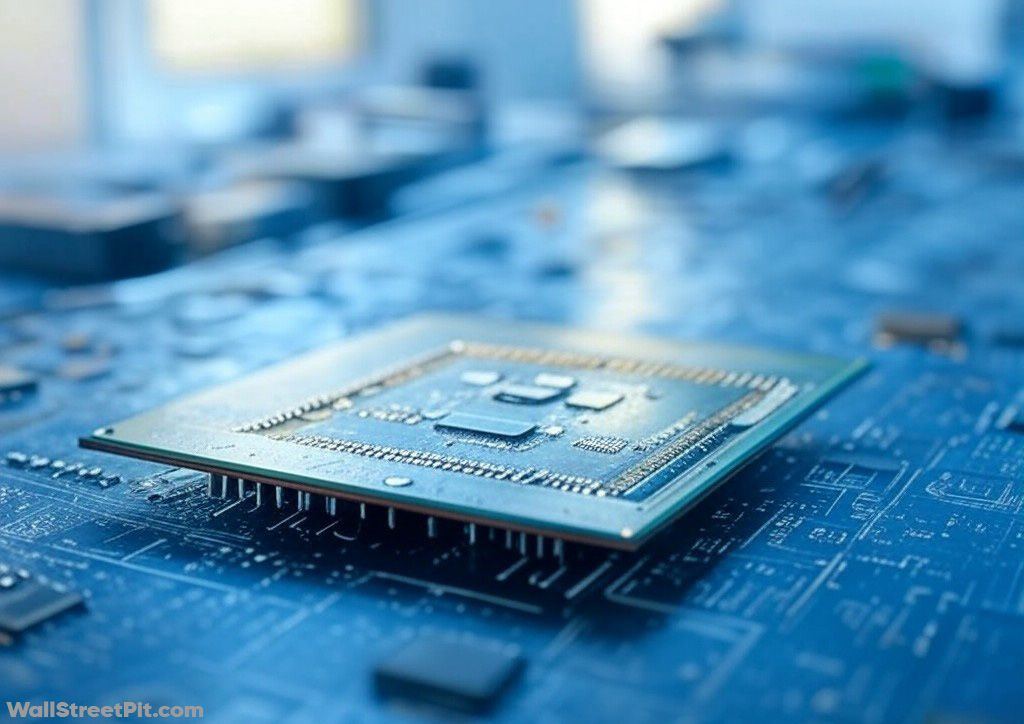
The prospect of easing U.S. export restrictions on advanced artificial intelligence chips to China has emerged as a pivotal policy crossroads, with Nvidia Corp. (NVDA) at its core. U.S. Commerce Secretary Howard Lutnick recently underscored that President Donald Trump holds the authority to greenlight or block sales of Nvidia’s H200 processors, a determination that weighs heavily amid ongoing bilateral tensions. This deliberation reflects a broader strategic calculus: whether to prioritize economic gains from technology exports or to reinforce national security barriers that have defined U.S.-China tech relations since 2022.
Nvidia’s H200 chips, successors to the H100 series, represent a leap in AI computational power, equipped with enhanced high-bandwidth memory that accelerates data processing for large-scale machine learning tasks. These capabilities have fueled Nvidia’s dominance in the global AI hardware market, where the company commands over 80% share in data center GPUs. Yet, access to China – the world’s largest AI research and development hub – remains curtailed under export controls designed to limit Beijing’s military applications of such technology. Lutnick, in a Bloomberg TV interview, framed the dilemma starkly: permitting sales could sustain U.S. influence over China’s tech ecosystem, keeping it reliant on American innovation, while denial would compel Washington to outpace Beijing in the escalating AI competition.
Trump’s personal insight into Chinese President Xi Jinping, honed through years of direct engagements, positions him uniquely to navigate this terrain. Advisers across the administration are providing input, ensuring a multifaceted evaluation that balances commercial imperatives with geopolitical risks. Nvidia CEO Jensen Huang, who maintains frequent communication with Trump, has advocated strongly for market reentry. Huang’s rationale aligns with Nvidia’s business imperatives; China accounted for roughly 20 percent of the company’s revenue prior to the restrictions, and exclusion has ceded ground to domestic rivals like Huawei’s Ascend series. Lutnick acknowledged Huang’s compelling case, noting broad support among stakeholders for reconsideration, though he emphasized that Trump will render the ultimate verdict based on comprehensive briefings from experts.
Opposition from national security advocates in Congress looms large, with some pushing legislative measures to codify bans on high-caliber processor exports. These critics highlight the dual-use potential of AI chips in enhancing surveillance systems, cyber capabilities, and autonomous weaponry – concerns amplified by recent Department of Justice indictments of individuals smuggling similar technologies to China. The H200’s approval would signal a departure from the stringent regime established in 2022, which has already prompted Beijing to issue directives against purchasing even compliant variants like the H20, approved earlier this year but subsequently shunned by local firms. This dynamic has intensified China’s push for semiconductor self-sufficiency, evidenced by investments exceeding $50 billion in state-backed chip initiatives since 2023.
At stake is not merely Nvidia’s bottom line – potential H200 sales could unlock billions in deferred revenue – but the trajectory of global AI leadership. The U.S. has invested over $280 billion through the CHIPS and Science Act to bolster domestic fabrication, aiming to reduce vulnerabilities in supply chains dominated by Taiwan and South Korea. Approving these exports might foster a controlled interdependence, mitigating Beijing’s leverage via rare earth mineral restrictions, which supply 90 percent of global needs. Conversely, upholding the status quo could accelerate fragmentation in the semiconductor ecosystem, spurring parallel AI advancements that diverge from Western standards. Trump’s resolution will thus calibrate the U.S. response to China’s technological ascent, influencing everything from cloud computing infrastructures to defense postures in an era where AI underpins strategic superiority. As deliberations continue, the outcome remains fluid, hinging on a synthesis of economic pragmatism and security vigilance that defines the administration’s approach to this high-stakes frontier.
WallStreetPit does not provide investment advice. All rights reserved.
- Bulenox: Get 45% to 91% OFF ... Use Discount Code: UNO
- Risk Our Money Not Yours | Get 50% to 90% OFF ... Use Discount Code: MMBVBKSM
Disclaimer: This page contains affiliate links. If you choose to make a purchase after clicking a link, we may receive a commission at no additional cost to you. Thank you for your support!



Leave a Reply